If you’ve ever tried to get a straight answer on SEO pricing, you know how frustrating it is.
One agency quotes $300/month. Another quotes $8,000. Both claim to deliver results.
So what’s the real number?
Here’s the short answer: most small and growing businesses should budget $1,000–$3,000/month for SEO.
But the price alone tells you almost nothing.
A $500 plan can move the needle. A $5,000 plan can completely miss. The difference is almost always the work behind the price not the number on the invoice.
This guide breaks down exactly what you get at each pricing tier, which red flags to avoid, and how to know whether monthly SEO is actually worth it for your business.
Table of Contents
1. The Short Answer
Typical SEO costs $500–$5,000/month.
Most small and medium-sized businesses land somewhere between $1,000 and $3,000 monthly.
The range is wide because every website starts from a completely different position. A local plumbing company needs different work than a national ecommerce store. And the agency type freelancer, boutique, or full-service changes the price significantly.
But here’s the key insight:
Don’t just ask “how much does SEO cost per month?” Ask what you’re actually getting for that monthly fee.
The rest of this guide answers exactly that.
Key Takeaway: The typical SEO budget is $1,000–$3,000/month, but the work matters far more than the number.
2. What Actually Drives Your Monthly SEO Cost?
SEO pricing isn’t a fixed formula. Five factors have the biggest impact on what you’ll pay.
Industry Competition
Your competitive landscape determines how much effort it takes to win rankings.
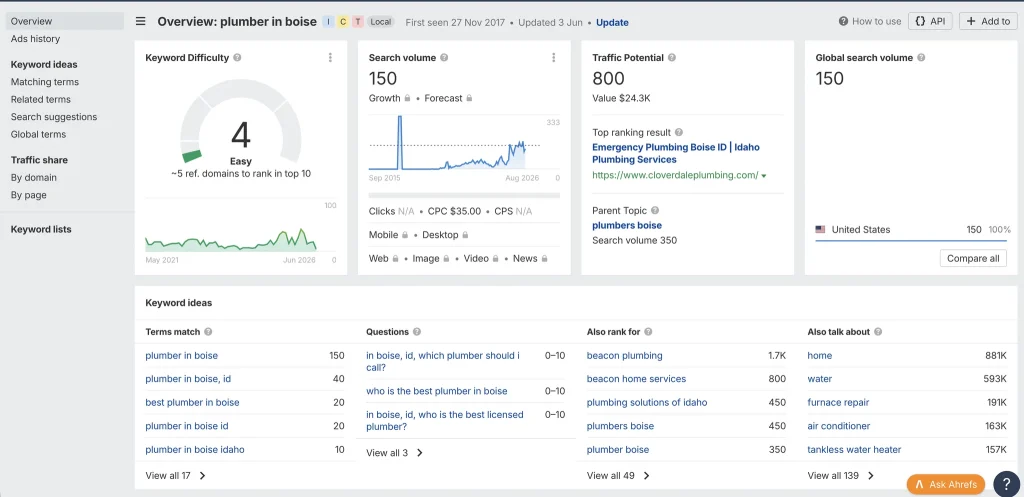
Ranking for “plumber in Boise” requires a very different level of effort.
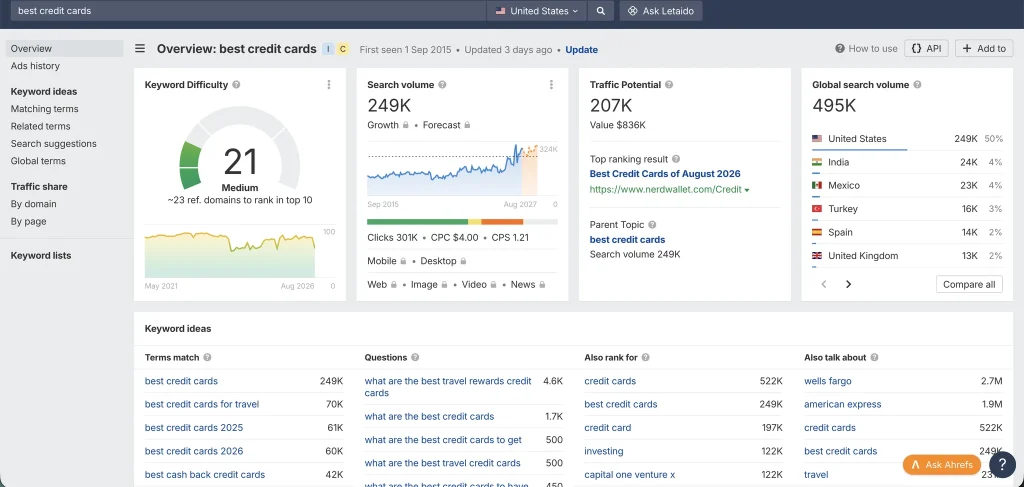
If you compared it with the keywords “best credit cards” or “business insurance.” Competitive industries need more content, more links, more technical work, and deeper research all of which raise the monthly cost.
Current Website Condition
A clean, well-structured website needs less foundational work.
A website with broken links, poor indexing, duplicate content, and thin pages needs significantly more attention especially in month one. Fixing hundreds of indexing issues alone can consume most of the first month’s budget.
Scope of Services Included
Not all SEO packages are built the same.
Some plans cover only title tag and meta description updates. Others include technical SEO, content production, internal linking, schema markup, competitor research, and link building. More services mean a higher monthly SEO cost.
Here’s why that matters: two agencies can both charge $1,500/month while delivering completely different amounts of actual work.
Who Is Doing the Work?
Freelancers typically have lower overhead than agencies. Agencies often have dedicated specialists for technical SEO, content, outreach, and strategy. In-house SEO hires come with salary and employment costs on top.
The right structure depends on how much work your website actually needs.
Your Keyword Targets
Local keywords have a smaller target area. National keywords require more authority and content. Ecommerce sites may need hundreds or thousands of product and category pages optimized.
Ranking a single-city service business is a very different project than ranking an online store across the entire country.
Key Takeaway: Your SEO cost should reflect your competition, website condition, service scope, team type, and keyword targets not just a number the agency picked.
3. Monthly SEO Pricing Tiers: What You Get at Each Level
SEO packages generally fall into four practical pricing ranges. Here’s what you can realistically expect at each level.
Tier 1: $300–$999/Month
This is the entry-level market. Freelancers, automated tools, and offshore agencies compete here.
A typical package at this level includes:
- Basic keyword research
- Title and meta description updates
- Simple on-page changes
- Basic monthly reporting
- Limited recommendations
What you usually won’t get: serious technical SEO, meaningful content production, or real link building.
This tier can work for very small websites with simple goals, or when you’re already handling most SEO tasks yourself.
The honest verdict: $300–$999/month can maintain basic SEO hygiene, but it rarely drives aggressive growth. Don’t expect it to compete with established websites in difficult markets.
Tier 2: $1,000–$2,000/Month
This is where real, ongoing SEO begins for most small businesses.
A stronger plan at this level can include:
- Full website SEO audit
- Technical SEO fixes
- On-page optimization
- Keyword mapping
- Google Search Console setup and review
- Internal linking
- Competitor research
- Monthly reporting
This range works well for local businesses and smaller ecommerce stores. You get a solid foundation without paying enterprise-level prices.
The honest verdict: $1,000–$2,000/month can deliver meaningful SEO growth when the strategy fits the website.
Tier 3: $2,000–$3,500/Month
This tier unlocks full-stack SEO.
You get everything from Tier 2 plus more strategic, growth-focused work:
- Content strategy and production
- Content briefs for writers
- Link building
- Schema markup implementation
- Competitor gap analysis
- Internal link campaigns
- Conversion-focused optimization
- Regular strategy calls
This range fits growing ecommerce businesses and local companies targeting multiple cities.
To give you a real example: this is the investment level where WhyNotSEO campaigns have produced results like 248% traffic growth for a luxury watch store and 305% traffic growth for a shoe store. Those are real case studies not a guarantee for every website.
The honest verdict: $2,000–$3,500/month gives growing businesses the resources for real execution across multiple growth channels.
Tier 4: $3,500–$7,000+/Month
This is the enterprise SEO range. Large websites need multiple specialists working in parallel.
A campaign at this level includes everything from Tier 3, plus:
- National SEO strategy
- International SEO and hreflang management
- Advanced technical SEO
- Digital PR
- Large-scale content planning
- Enterprise analytics
- AI search visibility
- Advanced competitor analysis
International websites create complex technical challenges. Sites with thousands of pages introduce crawling and indexing problems that require dedicated expertise.
4. Monthly Retainer vs. Project-Based vs. Hourly SEO
There are three main ways to buy SEO. The right model depends on your situation.
Monthly Retainer
Best for most businesses. You pay for ongoing, continuous work instead of isolated tasks. Retainers typically run $500–$5,000+/month.
SEO benefits from consistent optimization, content production, link building, and technical improvements over time all of which fit the retainer model well.
Project-Based SEO
Best for specific, well-defined problems. A technical audit, a site migration, or a one-time penalty recovery are good candidates. Projects can range from $500 to several thousand dollars depending on scope.
Hourly SEO
Best for consulting and specialized advice. Experienced SEO consultants typically charge $75–$200/hour. Works well for strategy reviews or getting a second opinion but harder to manage for ongoing campaigns.
Which Model Is Best?
For most businesses, a monthly retainer provides the best long-term structure. A one-time audit can surface problems, but it can’t keep improving your site month after month.
Key Takeaway: Use projects for specific fixes. Use retainers for long-term, compounding growth.
5. What Every Monthly SEO Plan Should Include
A good SEO retainer has a clear, predictable work cycle. Here’s what that should look like.
Month 1: Foundation Work
The first month is about understanding your site and fixing what’s broken before building on top of it.
Your agency should:
- Audit your website top-to-bottom
- Review Google Search Console and Google Analytics
- Research competitors
- Research and map target keywords to pages
- Identify technical issues
- Fix major on-page problems
- Build an SEO roadmap
A new campaign should never start by blindly publishing content. The foundation comes first.
Month 2 Onwards: Ongoing Work
Ongoing SEO builds on the month one foundation. Your agency should typically:
- Create or optimize content
- Build relevant links
- Improve internal linking
- Fix technical issues as they surface
- Add and improve structured data
- Monitor rankings and Search Console data
- Test and refine new opportunities
Priorities should shift as the data changes. What worked in month three might not be the priority in month eight.
Quarterly: Strategy Review
Every quarter, zoom out. Review traffic trends, ranking progress, conversions, and competitor movements. Then adjust the strategy based on what the data actually shows — not what was planned six months ago.
A strong agency explains both the work and the reason behind it. If your agency can’t tell you exactly what they did this month and why, that’s a problem.
6. Six Red Flags in SEO Monthly Pricing
Cheap SEO can end up costing you far more than quality SEO — in lost time and wasted budget. Watch for these warning signs.
1. Guaranteed #1 Rankings for Low Prices
No one can honestly guarantee a specific Google ranking. Rankings depend on competition, algorithm updates, website quality, and dozens of other variables. A $300 package promising top positions in 30 days should immediately put you on guard.
2. No Breakdown of Work in the Proposal
“SEO optimization” is not a deliverable. A real proposal should list specific tasks, deliverables, and priorities not vague language that could mean anything.
3. Vague or No Monthly Reporting
You need to see what actually happened each month. A real report does more than show a ranking screenshot. It connects completed work to measurable results in Google Search Console, traffic data, and keyword movement.
4. Lock-In Contracts Over 12 Months With No Exit Clause
SEO takes time but unreasonable lock-in creates unnecessary risk for you. Always ask about cancellation terms before signing any contract.
5. Cheap Backlink Packages

“500 backlinks for $99” tells you nothing about quality or relevance. A single relevant link from a real, trusted website is worth more than 500 links from low-quality directories. Quantity doesn’t build authority relevance and quality do.
6. They Can’t Explain What They Did or Why
Your SEO provider should understand their own work at a granular level. They should be able to explain why a specific page needs optimization and why a technical issue matters. Vague answers are a signal your budget isn’t producing useful work.
real SEO provider can explain the work, the reasoning behind it, and the expected impact. If they can’t, keep looking.
7. How Long Until SEO Actually Works?
SEO is not instant. Your timeline depends on competition, website history, content quality, domain authority, and technical health.
0–3 Months: Foundation Phase
This is when you fix the basics. Technical problems get resolved. Pages get optimized. Keywords get mapped. Search engines begin processing your changes. Some pages may start picking up impressions in Search Console, but major traffic movement is rare.
3–6 Months: Early Momentum
You start having real data to work with. Content improvements begin generating stronger signals. Some target keywords start moving toward page one. Organic traffic can begin growing slowly at first.
6–12 Months: Compounding Growth
This is where the compounding effect becomes clear. More optimized pages. More content attracting links. Domain authority growing. Some businesses see substantial organic growth during this window.
For example, one WhyNotSEO kids education case study reported 189% traffic growth during this period. That’s one data point not a universal result.
12+ Months: SEO as a Real Channel
When you keep improving consistently, SEO can become one of your most valuable traffic channels. Strong pages continue attracting visitors. New content captures additional search demand. Your accumulated authority makes future growth easier and cheaper.
8. Is Monthly SEO Worth It?
For most businesses, yes. But it has to fit your situation.
Monthly SEO Is Worth It When:
- You operate in a competitive market
- You sell products through ecommerce
- You serve multiple locations
- Organic search can generate high-value leads
- You want a long-term traffic channel that doesn’t stop when you stop paying
- Your website has room to grow with content
Monthly SEO May Not Be Worth It When:
- Your market has almost no online competition
- There’s no real search demand for your product or service
- Your website can’t convert visitors
- You have no content strategy
- You need immediate traffic results (use paid ads for that)
Here’s an important distinction: paid ads can drive traffic quickly, but that traffic stops the moment you stop paying. SEO, when done right, can keep generating organic traffic long after the content is published and the work is done.
That doesn’t make SEO free — you still need ongoing investment to maintain and grow your advantage. But the long-term ROI potential is fundamentally different from paid media.
9. How Much Does WhyNotSEO Charge?
Here’s exactly what we charge. No hidden fees, no vague “custom pricing.”
Growth: $999/Month
Designed for smaller websites that need a strong SEO foundation.
The focus: technical health, on-page SEO, keyword targeting, and building sustainable growth momentum.
Scale: $1,999/Month
Designed for businesses ready to compete for bigger keywords and grow beyond the basics.
Includes: deeper technical work, content strategy, competitor research, and authority building.
Authority: $2,999/Month
Designed for businesses targeting larger markets — including national and international SEO goals.
The exact scope still depends on your website and growth opportunity. We don’t believe every business needs the most expensive plan. Your budget should match your actual needs, not our margins.
Not sure where your site stands? We offer a free SEO audit before you commit to anything.
10. FAQ
How much does SEO cost per month on average?
Most businesses should expect $1,000–$3,000/month for ongoing SEO. Smaller campaigns can cost less. Enterprise campaigns can cost significantly more. The right budget depends on your competition and the scope of work required.
Is $500/month enough for SEO?
It can be for a small website with simple goals. At that budget, you’ll typically get keyword research, metadata updates, and basic recommendations. But it usually limits your content production, technical work, and link building significantly.
Why do some agencies charge $5,000+ per month?
Higher prices reflect greater campaign complexity. Large websites may need technical specialists, content teams, outreach coordinators, international SEO, and advanced reporting — all running in parallel. The price should always match the actual scope of work.
Can I do SEO myself instead of hiring an agency?
Yes. Keyword research, technical SEO, content optimization, and internal linking are all learnable skills. DIY SEO can save money if you have the time to do it properly. An agency becomes worth it when the work exceeds your available time or expertise.
What’s a fair SEO budget for a local business?
A local business can often start around $1,000–$2,000/month. The right budget depends on local competition and the number of locations you’re targeting. A single-location business usually needs less than a company targeting multiple cities.
How do I know if my SEO agency is doing real work?
Ask for a monthly task report. It should show completed work, key findings, recommendations, and next steps backed by data from Google Search Console. If your agency can’t explain what they did and why it matters, that’s a red flag.
Conclusion
The typical SEO monthly cost lands between $1,000 and $3,000 for most small and growing businesses.
But price should never be your only filter.
Look at the actual work, the strategy behind it, the quality of reporting, and the team’s ability to explain what they’re doing and why.
If you’re not sure what your site actually needs, start with an audit. Review your site yourself, get proposals from a few agencies, and compare the substance not just the price tag.
WhyNotSEO also offers a free SEO audit before you commit to anything. No pitch, no pressure — just a real look at where your site stands.